Location & Room Shape
“A good cinema begins with location,” Janiszewka asserts. The guide emphasises that the ideal site is a windowless or subterranean space, basements are frequently the first choice—because they facilitate light control and acoustic isolation. Rectangular rooms are preferred over square ones, and minimal exterior noise is critical for fidelity. Where basements aren’t available, lofts, garages or repurposed rooms have been used successfully (especially in dense urban settings).
Comfort, Texture & Atmosphere
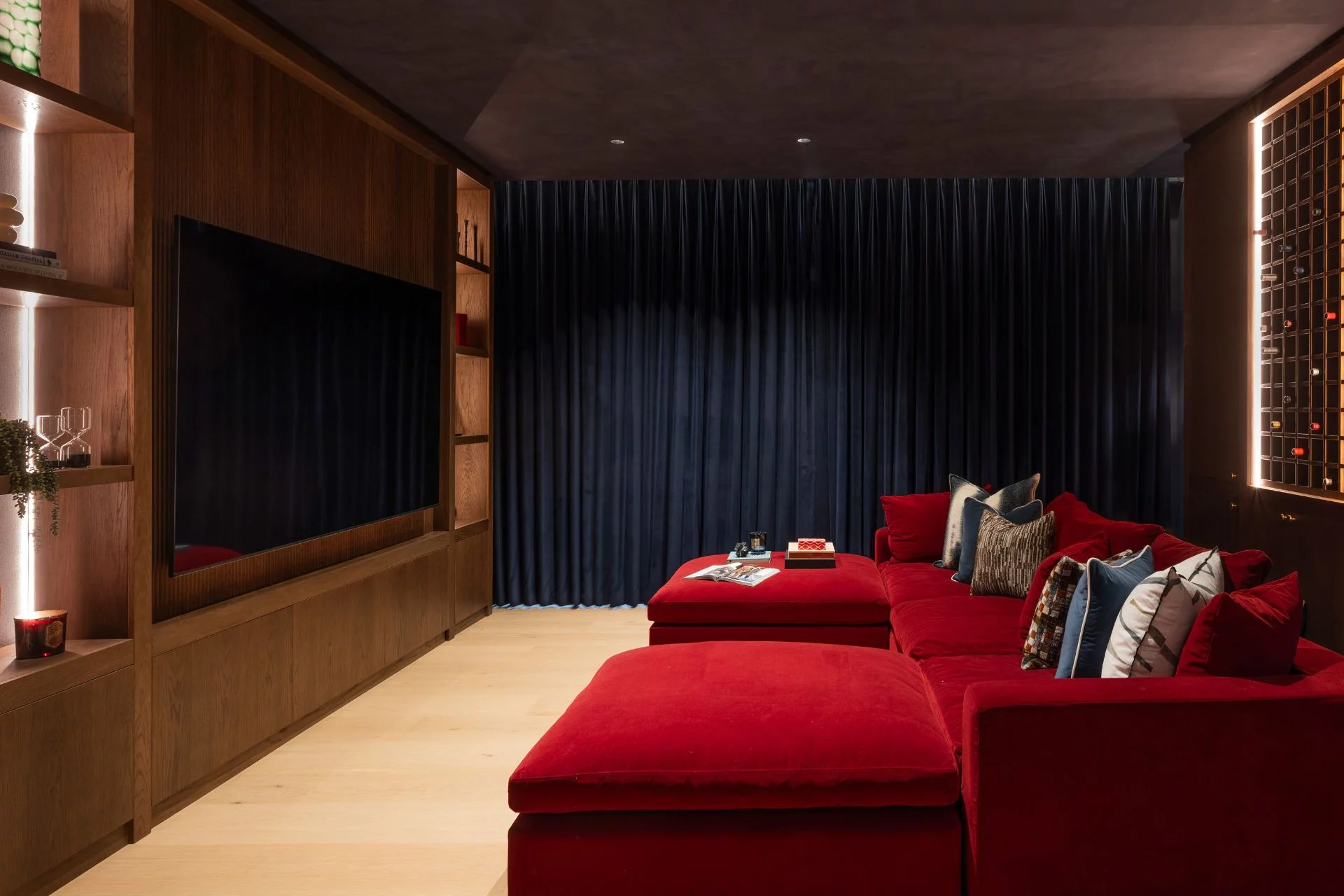
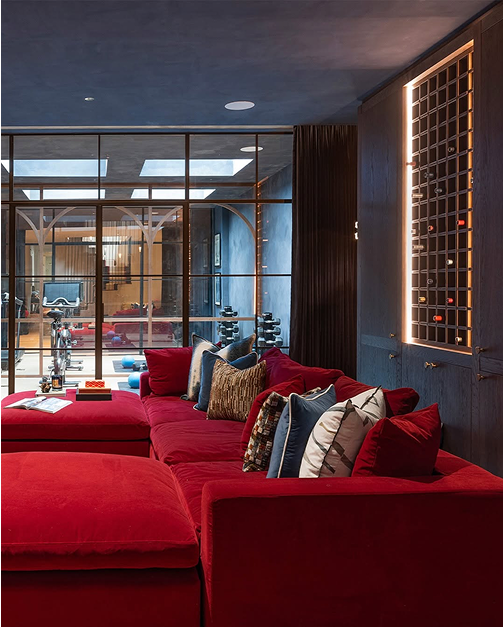
A true cinema is more than audiovisual equipment, it’s plush, immersive comfort. The article recommends deep, upholstered recliners (brands like Moovia are highlighted for their engineering and design flexibility), layered lighting circuits (step lights, LED cove lighting, sconces), and materials with acoustic benefits (velvet panels, textured wall surfaces, thick carpets). Janiszewka urges treating the cinema as you would a library or lounge—layered textures, moody palettes, and glamour touches (bronze trims, bespoke joinery) can elevate it.
Ventilation, Acoustics & Tech
Even the most beautiful cinema will suffer if heat, echo or glare aren’t managed. The guide emphasises ventilation and climate control (important when multiple people and electronics generate heat) and advises that acoustic treatment should feel part of the design, not an afterthought. Panels, diffusers and integrated solutions are encouraged.
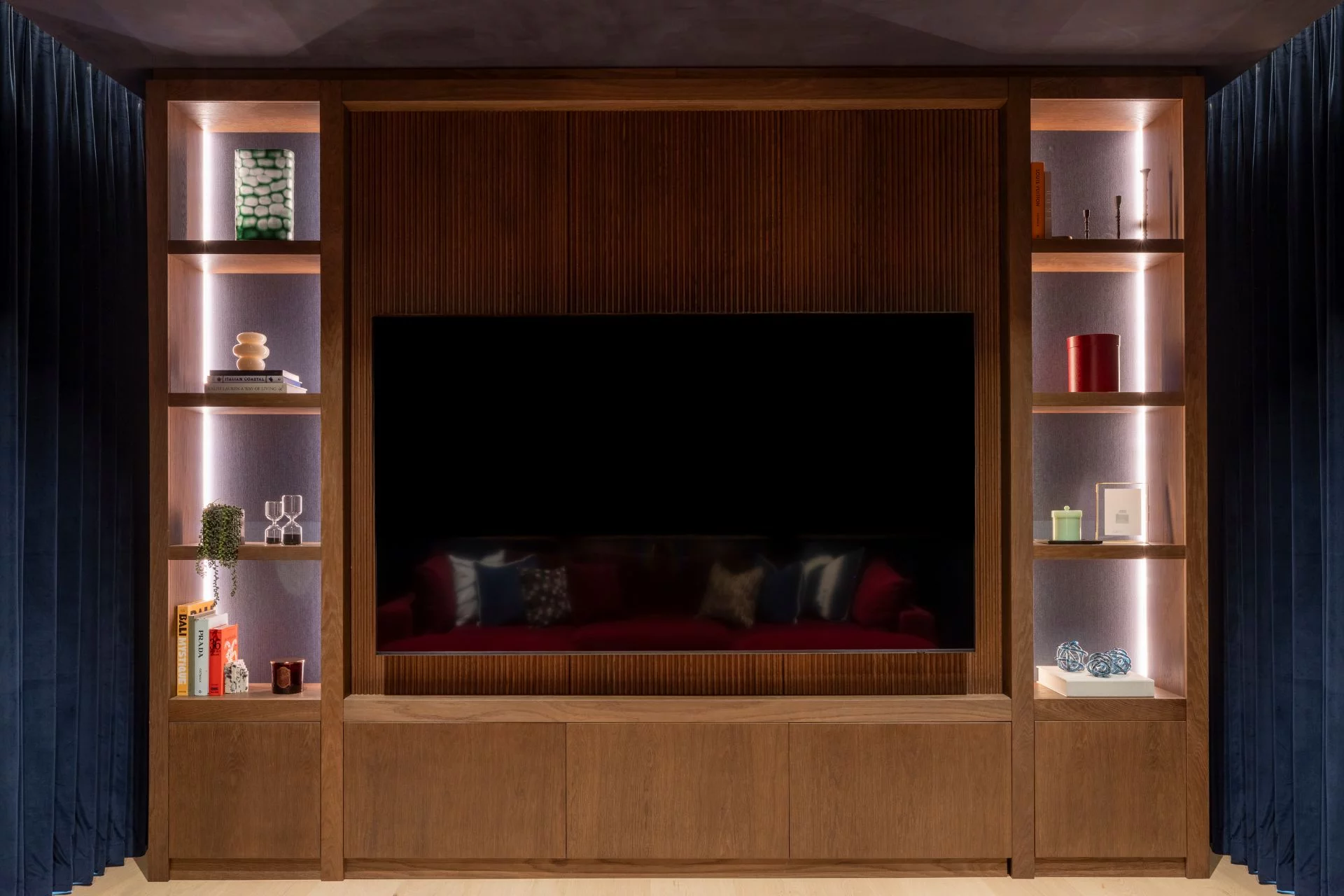
On the technology side, the choice between projector and TV depends on room size and use case—larger dedicated rooms favour a projector, while smaller media spaces may benefit more from a large, high-brightness display. Sound systems (7.1 or equivalent) are recommended for immersive audio, although a well-configured soundbar may suffice in more compact settings. Expert integrators are also advocated, because alignment, screening materials and calibration affect the final quality dramatically.
Country and Town House
If you’d like to explore the full article, you can read it in full on Country & Town House here: https://www.countryandtownhouse.com/interiors/home-cinema-design-guide/
If you’re considering designing or upgrading a home cinema in your space, whether a hidden media room or an immersive lounge, we’d be delighted to discuss how we might bring that same level of craftsmanship, acoustic precision and architectural intention to your project. Get in touch with Project London to start the conversation.